

Plant-based feeding is one of the fastest-growing trends in pet care — and one of the most polarizing. Search the internet and you will find passionate claims that dogs should never touch a meat-free bowl, alongside equally confident promises that going vegan will add years to your dog's life. Most owners just want a straight answer: can dogs actually be healthy on a vegetarian or vegan diet, and if so, what do I need to add to make it work?
This guide takes that question seriously. Dogs are not cats — they are metabolic omnivores, which changes the conversation entirely. A well-formulated plant-based diet is a legitimate option for many dogs, but the operative phrase is well-formulated. The whole game is making sure the nutrients a dog would normally get from meat are intentionally supplied from somewhere else. Here is what the research says, the specific nutrients to watch, and the popular foods owners are reaching for across both diet styles.
Key takeaways
- Dogs are omnivores, not obligate carnivores. Unlike cats, dogs can digest and use plant proteins efficiently, which is why a complete plant-based diet is biologically feasible.
- The outcome data is encouraging but still maturing. A year-long clinical study and large owner surveys report healthy-or-better results on complete plant-based diets — though long-term controlled trials are still limited.¹²³
- The real risk is under-formulation. Some commercial and many home-made meat-free diets fall short on key nutrients — one analysis found commercial vegan foods missing the amino acid methionine.⁵
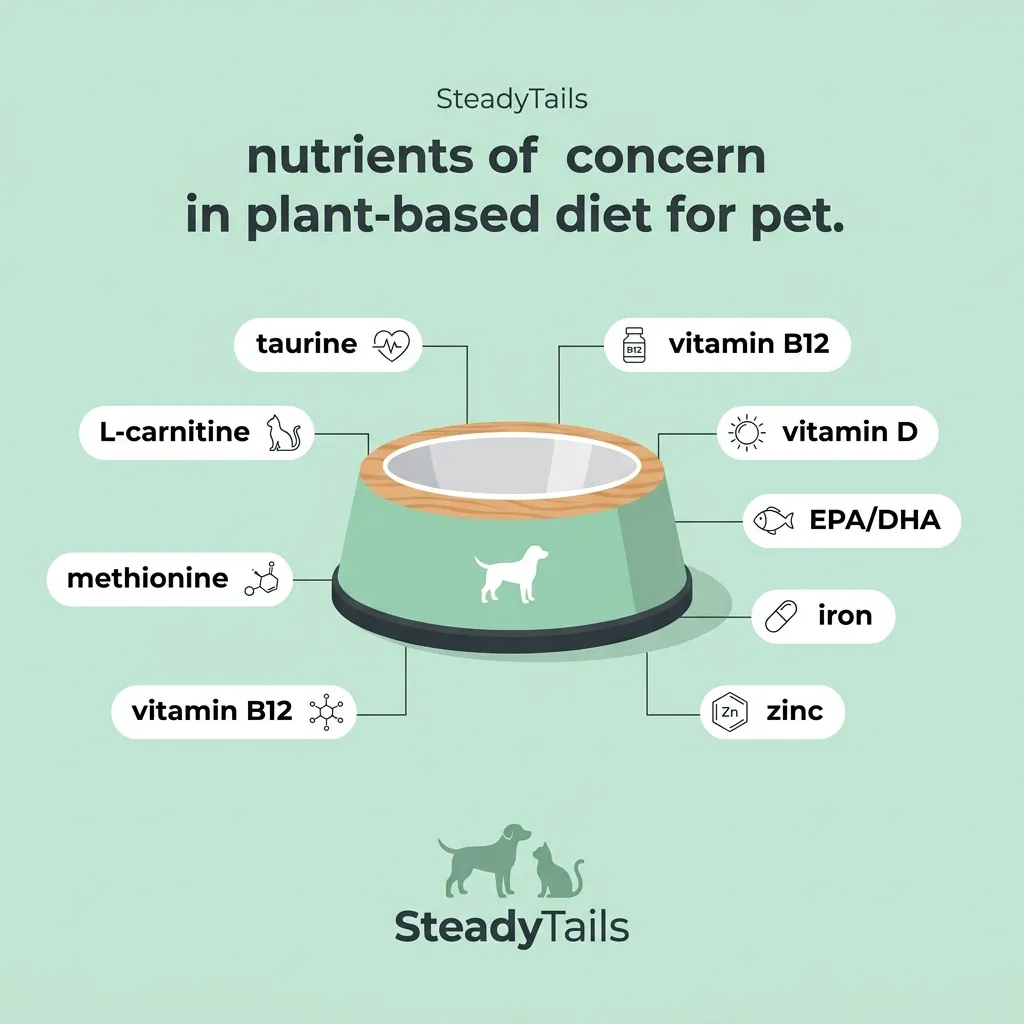
- A short list of nutrients needs deliberate supplementation: taurine, L-carnitine, sulfur amino acids, vitamin B12, vitamin D, vitamin A, EPA/DHA, and a few minerals.
- Choose the food carefully, then track the transition. An AAFCO-complete label plus close monitoring of weight, stool, coat, and energy beats guesswork — and a shared log makes it effortless.
Essential Nutrient Scorecard for Vegetarian & Vegan Dogs
Dogs can thrive on a plant-based diet, but only if these key nutrients are explicitly supplemented and monitored.
Taurine & L-Carnitine
Essential for cardiac muscle health. Prevents dilated cardiomyopathy (DCM).
Vitamin D3
Required for calcium absorption. Plants contain D2, which dogs utilize poorly.
Vitamin B12
Crucial for red blood cells & nerve function. Unavailable in plant sources.
Arachidonic Acid
Essential omega-6 fatty acid for healthy skin, coat, and cell membranes.
Can dogs actually be healthy without meat?
The single most important fact in this whole debate is the difference between dogs and cats. Cats are obligate carnivores — they have a hard biological requirement for nutrients like preformed taurine and vitamin A that are difficult to supply without animal tissue, which is why most veterinary nutritionists advise against vegan diets for cats. Dogs are different. Over thousands of years alongside humans, dogs evolved to digest starch and use plant-based nutrients, and they are best described as omnivores. That biological flexibility is what makes a complete plant-based diet possible for dogs in the first place.
The evidence base, while still developing, leans cautiously positive for properly formulated diets:
- A year-long clinical study followed healthy adult dogs fed a commercial plant-based diet and found they maintained normal clinical health, blood work, and nutrient biomarkers over 12 months — including no concerning change in cardiac biomarkers.²
- A large guardian survey of over 2,500 dogs reported that dogs on vegan diets had some of the lowest rates of owner-reported health problems and veterinary visits, with no health disorder found to be more common on the vegan diet.¹
- A systematic review of the available studies concluded that there is some evidence of benefits, but also that the body of high-quality, long-term research is still limited — a fair and honest caveat.³
It is worth being candid about the limits here: much of the survey data is owner-reported, sample sizes for long-term studies are modest, and nutrition science evolves. None of that makes plant-based feeding reckless — it makes thoughtful formulation and veterinary involvement essential. The takeaway is not "every dog should go vegan," nor "no dog ever can." It is that the diet's success depends almost entirely on whether it is nutritionally complete.
Vegetarian vs. vegan: what's the difference for your dog?
These terms get used interchangeably, but the distinction matters a lot for supplementation:
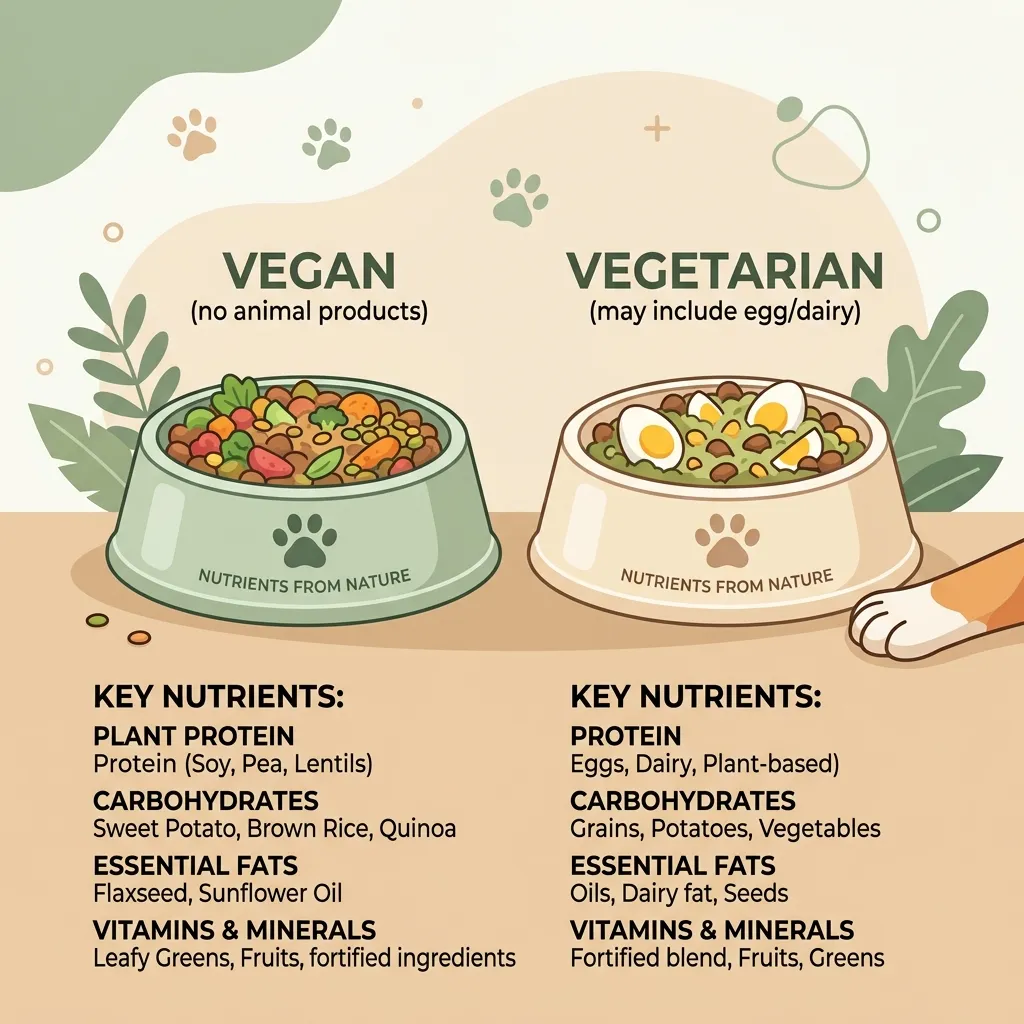
- Vegetarian diets exclude meat and fish but can still include eggs and dairy. Those animal-derived ingredients are nutritional powerhouses — they bring high-quality protein, naturally occurring vitamin B12, and amino acids that make balancing the diet considerably easier.
- Vegan diets contain no animal products whatsoever. Every essential nutrient has to come from plants, algae, fermentation-derived ingredients, or synthetic supplements. This removes the egg-and-dairy safety net, so vegan diets demand the most careful formulation.
Neither is automatically "better." A vegetarian diet is often the gentler on-ramp, while a fully vegan diet is achievable but leaves less room for error. In both cases, the question to keep asking is the same: where is each essential nutrient coming from?
Which nutrients can a plant-based diet fall short on?
This is the heart of the matter. Animal tissue is naturally rich in several nutrients that plants supply in smaller amounts, less bioavailable forms, or not at all. A good plant-based dog food closes every one of these gaps on purpose. Here are the nutrients to know — and where a well-made diet sources them.⁸
| Nutrient | Why it matters | Plant-based / supplemental source |
|---|---|---|
| Taurine | Supports heart muscle and vision. Dogs can synthesize it, but not always in sufficient amounts. | Synthetic (fermentation-derived) taurine added directly to the formula. |
| L-carnitine | Helps the heart and muscles turn fat into energy; linked to cardiac health. | Synthetic L-carnitine supplementation. |
| Methionine & cysteine | Sulfur amino acids; the building blocks the body uses to make its own taurine. | Supplemental DL-methionine; legumes and seeds help but often aren't enough alone. |
| Lysine | Essential amino acid often lower in cereal-grain proteins. | Legume proteins (peas, chickpeas, lentils) and targeted supplementation. |
| Vitamin B12 (cobalamin) | Nerve function and red blood cell formation; essentially absent from plants. | Fermentation-derived B12; eggs/dairy in vegetarian diets. |
| Vitamin D | Calcium balance and bone health; dogs can't make enough from sunlight. | D2 (ergocalciferol from UV-treated mushrooms) or lichen-derived D3. |
| Vitamin A | Vision, immunity, skin. Plants supply beta-carotene, which dogs convert (variably) to retinol. | Supplemental retinol or generous beta-carotene sources. |
| EPA & DHA (omega-3) | Anti-inflammatory fats for skin, joints, brain and heart. | Algal oil (a vegan, marine-free source of EPA/DHA). Flax provides ALA, which dogs convert poorly. |
| Iron, zinc, calcium, iodine | Blood, immune function, bone, and thyroid health; less bioavailable from plants. | Mineral premixes; iodine from sea-vegetable or supplemental sources. |
One peer-reviewed analysis of commercial vegan pet foods found a product that fell below the minimum recommendation for methionine — even though its label listed methionine as a supplement.⁵ That is exactly why the label claim and the manufacturer's formulation rigor matter so much: getting these nutrients onto the ingredient list is not the same as getting them in at the right level.
Do plant-based diets cause taurine deficiency and DCM?
No plant-based diet conversation is complete without addressing dilated cardiomyopathy (DCM), a serious heart condition. Here is the balanced version. Decades ago, researchers linked taurine deficiency to DCM in certain dogs, and showed that supplementing taurine (often with L-carnitine) could partially or completely reverse the disease in affected dogs.⁷ More recently, attention turned to certain diet types and to the role of low methionine and cysteine — the amino acids dogs use to build taurine themselves.⁶
Veterinary guidance now lists vegetarian, vegan, and home-prepared diets among those worth considering for taurine testing if a dog develops DCM — not because plants are inherently dangerous, but because under-formulated low-sulfur-amino-acid diets can be.⁶ Larger breeds (and breeds such as Golden Retrievers) appear more prone to taurine shortfalls. The practical, non-alarmist takeaways:
- Choose a complete diet that explicitly adds taurine and L-carnitine and meets methionine requirements.
- If your dog is a large or at-risk breed, ask your vet whether blood taurine screening is sensible.
- Reassuringly, the year-long plant-based feeding study found no adverse change in cardiac biomarkers in healthy dogs on a well-formulated diet.²
Important medical disclaimer: SteadyTails is a tracking and coordination tool, not a source of veterinary or nutritional advice. Do not start, stop, or change your dog's diet or supplements — or interpret symptoms — without guidance from your veterinarian, who can account for your dog's age, breed, and health history.
How do you choose a complete and balanced plant-based food?
If you decide to explore plant-based feeding with your vet, the quality of the specific product matters more than the diet category. Use this checklist:
- Look for the AAFCO (US) or FEDIAF (EU) statement. The label should say the food is "complete and balanced" for your dog's life stage (adult maintenance, growth, or all life stages). This is non-negotiable.
- Prefer foods formulated by a qualified nutritionist. Ideally someone board-certified (a veterinary nutritionist, e.g., DACVN or ECVCN). Brands that employ nutrition scientists and publish their reasoning earn extra trust.
- Confirm the at-risk nutrients are added. Scan for supplemental taurine, L-carnitine, B12, vitamin D, and algal DHA/EPA on the ingredient panel.
- Check how the claim was substantiated. A diet validated through feeding trials carries more real-world weight than one substantiated by formulation alone — though both can be appropriate.
- Transition slowly. Mix in the new food over 7–10 days to protect your dog's digestion, and watch how they respond.
Popular plant-based and vegetarian dog food brands
The market has expanded quickly. Below is a neutral, non-ranked overview of widely available options across both diet styles, to orient your own research. This is not an endorsement, and availability and formulas change — always verify the current AAFCO/FEDIAF statement on the label and confirm a food suits your individual dog with your vet.
| Brand | Type | Notable points |
|---|---|---|
| v-dog | Vegan (kibble & wet) | One of the longest-running vegan dog food makers; recipes include added taurine, L-carnitine and DHA. Some products suitable for puppies. |
| Wild Earth | Vegan (kibble) | Yeast- and grain-based proteins; developed with veterinarians and food scientists. A common pick for legume-free preferences. |
| Petaluma | Vegan (baked) | Baked recipe built largely on organic ingredients; formulated to meet AAFCO adult maintenance with added taurine, L-carnitine and algal DHA. |
| Halo Holistic Plant-Based | Vegan (kibble & wet) | From a mainstream brand with broad retail availability (e.g., Chewy); plant-based line within a larger product range. |
| PawCo | Vegan (fresh) | Higher-protein fresh food; founded by a former plant-based-meat scientist. Positioned for active dogs. |
| Bramble | Vegan (fresh, whole-food) | Gently cooked, minimally processed whole-food recipes; subscription-based fresh delivery model. |
| Natural Balance Vegetarian | Vegetarian | Long-established, widely stocked vegetarian formula; an accessible entry point for meat-free feeding. |
| Royal Canin Veterinary Vegetarian | Vegetarian (prescription) | A therapeutic diet used under veterinary supervision, often for food-elimination trials. Requires a vet's authorization. |
Dog Diet Comparison: Plant-Based vs. Meat-Based
| Feature | Meat-Based Diet | Formulated Plant-Based Diet |
|---|---|---|
| Essential Amino Acids | Naturally complete profile (Taurine, L-carnitine, etc.). | Must be synthetically supplemented to ensure adequacy. |
| Bioavailability | Very high; naturally optimized for canine digestion. | Varies; requires high-quality protein isolates (soy, pea). |
| Environmental Impact | High carbon footprint and resource intensive. | Low carbon footprint; sustainable crop usage. |
| Target Use Cases | Standard, active adult dogs. | Dogs with severe meat-protein allergies or environmental concerns. |
Which supplements should you discuss with your vet?
Here is the nuance owners most often miss: a genuinely complete-and-balanced commercial plant-based food should already contain everything on the nutrient list above. In that case, piling on extra supplements is not just unnecessary — it can create new imbalances (too much of one mineral can block absorption of another). Targeted supplementation is mainly relevant when:
- You are home-cooking a plant-based diet (in which case a complete supplement premix, designed with your vet or a nutritionist, is essential — not optional).
- Your vet identifies a specific deficiency through testing.
- You are bridging a gap in a diet that isn't fully balanced (a stopgap, not a long-term plan).
The usual candidates your vet may discuss are taurine, L-carnitine, vitamin B12, algal-oil omega-3 (EPA/DHA), and vitamin D. For a broader look at which canine supplements are backed by evidence and which are hype, see our companion guide on the top dog supplement trends for 2026: fact or myth.
Keep diet, supplements, and how your dog feels in one place
When you switch foods or add a supplement, the proof is in the patterns. SteadyTails lets every caregiver log meals, supplements, and daily wellness — appetite, energy, stool, coat — on one shared timeline, so you can actually see how a diet change is landing. Join the waitlist for early access on iOS and Android.
Join the SteadyTails waitlist →Tracking the transition: why it matters most
Whatever you and your vet decide, a diet change is one of the highest-value moments to track your dog closely. The benefits and the warning signs both show up in everyday patterns, not in a single snapshot. During and after a transition, keep an eye on:
- Stool quality and digestion — the earliest indicator of how well a new food agrees with your dog.
- Appetite and enthusiasm at mealtime — palatability is part of nutrition; a food only works if it gets eaten.
- Energy, mood, and activity — subtle dips are easy to miss day to day but obvious over a few weeks of logs.
- Coat and skin condition — a barometer of fatty-acid and protein adequacy.
- Body weight and condition — to confirm the new diet maintains a healthy weight.
This is exactly the kind of longitudinal picture that turns a vague "I think she's doing fine" into a clear, vet-ready record. If you share your dog's care with a partner or family, a single shared log also means everyone is feeding the same food, the same amount, with no duplicate meals — the same coordination problem we cover in why pets miss doses and the household system that fixes it. And when your next appointment arrives, our vet visit preparation checklist shows how to put that history to work. Caring for an older dog through a diet change? Our senior dog and cat care checklist pairs well with this guide.
The bottom line
Vegetarian and vegan diets are a real, increasingly mainstream option for dogs — not a fringe experiment. Because dogs are omnivores, a thoughtfully formulated plant-based diet can keep many of them healthy, and the early evidence is cautiously encouraging. But that success is earned, not assumed: it lives entirely in the formulation, the supplementation of nutrients like taurine, B12, and algal omega-3, and the partnership with your veterinarian. Choose a complete-and-balanced food, supplement only what is genuinely needed, and watch the patterns. Do those three things, and a meat-free bowl can be a perfectly responsible way to feed a dog.
See how a diet change is really going
Log meals, supplements, and daily wellness with every caregiver on the same page, and export a clean, vet-ready history for your next appointment. SteadyTails is coming soon to iOS and Android — reserve your spot free.
Get early access →References
- Knight A, Huang E, Rai N, Brown H. Vegan versus meat-based dog food: Guardian-reported health outcomes in 2,536 dogs, after controlling for canine demographic factors. PLOS ONE, 2022;17(4):e0265662. journals.plos.org/plosone/article?id=10.1371/journal.pone.0265662
- Linde A, Lahiff M, Krantz A, Sharp N, Ng TT, Melgarejo T. Domestic dogs maintain clinical, nutritional, and hematological health outcomes when fed a commercial plant-based diet for a year. PLOS ONE, 2024;19(4):e0298942. journals.plos.org/plosone/article?id=10.1371/journal.pone.0298942
- Domínguez-Oliva A, Mota-Rojas D, Semendric I, Whittaker AL. The Impact of Vegan Diets on Indicators of Health in Dogs and Cats: A Systematic Review. Veterinary Sciences, 2023;10(1):52. pmc.ncbi.nlm.nih.gov/articles/PMC9860667
- Harsini F, Knight A, Smith B. Should dogs and cats be fed vegan diets? Frontiers in Veterinary Science, 2024;11:1430743. frontiersin.org
- Zafalon RVA, Risolia LW, Vendramini THA, et al. Nutritional inadequacies in commercial vegan foods for dogs and cats. PLOS ONE, 2020;15(1):e0227046. pmc.ncbi.nlm.nih.gov/articles/PMC6968870
- Freeman LM, Stern JA, Fries R, Adin DB, Rush JE. Diet-associated dilated cardiomyopathy in dogs: what do we know? JAVMA, 2018;253(11):1390–1394. avmajournals.avma.org
- Ontiveros ES, Stern JA, et al. Development of taurine deficiency and dilated cardiomyopathy in golden retrievers fed commercial diets. PLOS ONE, 2018;13(12):e0209112. journals.plos.org/plosone/article?id=10.1371/journal.pone.0209112
- VCA Animal Hospitals. Vegetarian Diets for Dogs. vcahospitals.com/know-your-pet/vegetarian-diets-for-dogs
- U.S. Food & Drug Administration. Questions & Answers: FDA's Work on Potential Causes of Non-Hereditary DCM in Dogs. fda.gov