

The diagnosis lands hard: your dog has congestive heart failure. After the first wave of worry passes, a second, quieter challenge sets in — the one no one quite prepares you for. It is not the disease itself. It is the logistics of treating it: three or four different medications, each on its own clock, one of them best given on an empty stomach, all of it repeating two or three times a day, every day, often for years, and frequently shared between more than one person in the house.
That schedule is genuinely hard to run from memory — and in heart failure the cost of a missed or doubled dose is unusually high. This guide explains the medications your vet may prescribe and why their timing matters, the single home measurement that can warn you of trouble days before a crisis, what the research says about how much good consistent treatment actually does, and how to build a household system that keeps every dose on track. None of this replaces your veterinarian's instructions — it is here to help you carry them out reliably.
Key takeaways
- Mitral valve disease is the most common heart disease in dogs, and its treatment is a multi-drug, multiple-times-daily routine that is easy to mistime.¹²
- Pimobendan works best on an empty stomach — its absorption drops noticeably when given with food, so it is typically given about an hour before a meal.³
- A double dose of diuretic is dangerous, risking dehydration and kidney strain — which makes the shared-household "I thought you gave it" problem a real safety issue, not just an annoyance.²
- Sleeping respiratory rate is your early-warning number. A consistent climb above ~30 breaths per minute can be the earliest sign of fluid in the lungs.⁴⁵
- Consistency pays off. Starting pimobendan early delayed heart failure by a median of ~15 months in a large clinical trial.¹
First, what is congestive heart failure in dogs?
Most canine congestive heart failure (CHF) is the end result of myxomatous mitral valve disease (MMVD) — a slow degeneration of one of the heart's valves that lets blood leak backward, gradually enlarging the heart. MMVD is the single most common cardiovascular disease in dogs, especially smaller breeds.¹ Veterinary cardiologists describe its progression in four stages, which is helpful for understanding why your dog is — or is not yet — on certain medications:²
- Stage A: a breed or dog at risk, but with no detectable heart murmur or changes yet.
- Stage B: a murmur and valve changes are present, but the dog has never shown signs of heart failure. This stage is split into B1 (heart not yet enlarged) and B2 (the heart has enlarged to compensate).
- Stage C: the dog has developed clinical signs of heart failure — typically coughing, fast or labored breathing, or reduced stamina — and is being treated.
- Stage D: advanced, end-stage disease whose signs no longer respond to standard treatment and require specialized adjustments.
The stage your vet assigns drives the medication plan — and it can change over time, which is exactly why an accurate at-home record of doses and symptoms is so valuable at each recheck.
Which heart medications need exact timing?
A heart-failure regimen usually combines several drugs because each tackles a different part of the problem. The specifics below describe what your veterinarian prescribes and why — they are not dosing instructions. Never start, stop, or change a dose without your vet.
Pimobendan (Vetmedin) — the one with the empty-stomach rule
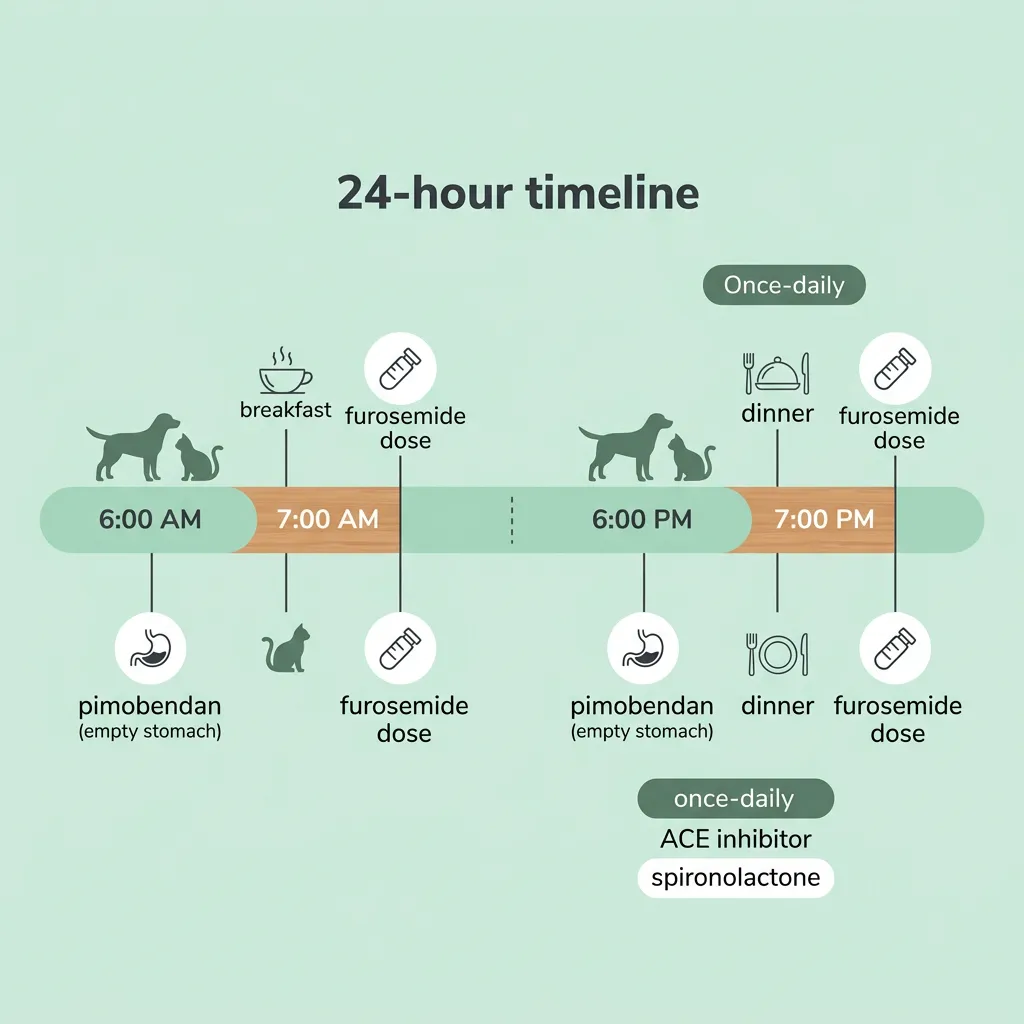
Pimobendan helps the heart contract more effectively while easing the load it pumps against. It is commonly prescribed at about 0.25–0.3 mg/kg every 12 hours for dogs in stages B2 and C.² Its quirk is absorption: the manufacturer's data show a bioavailability around 60–63% that is considerably reduced when the drug is given with food, so the guidance is to give it roughly one hour before a meal.³ That single rule is what turns a simple "morning and night" routine into a carefully choreographed sequence — dose first, breakfast an hour later — that is easy to get wrong when a different caregiver handles the morning.
Furosemide (or torsemide) — the diuretic you must not double
Furosemide is a loop diuretic that pulls accumulated fluid out of the lungs, which is what relieves the coughing and breathlessness of heart failure. For home care it is often given around every 12 hours and titrated — your vet adjusts the dose up or down based on your dog's breathing and bloodwork.² Because it is so powerful, it is also the drug where an accidental double dose is genuinely risky: too much can cause dehydration, electrolyte depletion, and strain on the kidneys. In a shared household, the same uncertainty that causes a skipped dose can just as easily cause two people to each give the "missing" diuretic. Torsemide, a longer-acting alternative, is sometimes substituted and follows the same caution.
ACE inhibitors and spironolactone — the background defense
Heart failure switches on a damaging hormonal cascade (the renin-angiotensin-aldosterone system) that drives fluid retention and further heart remodeling. An ACE inhibitor (such as benazepril or enalapril) and spironolactone are commonly added — often once daily — to blunt that cascade.² They do not produce a visible day-to-day effect the way a diuretic does, which is precisely why they are easy to forget: nothing obvious happens when a dose slips. Consistency is the whole point.
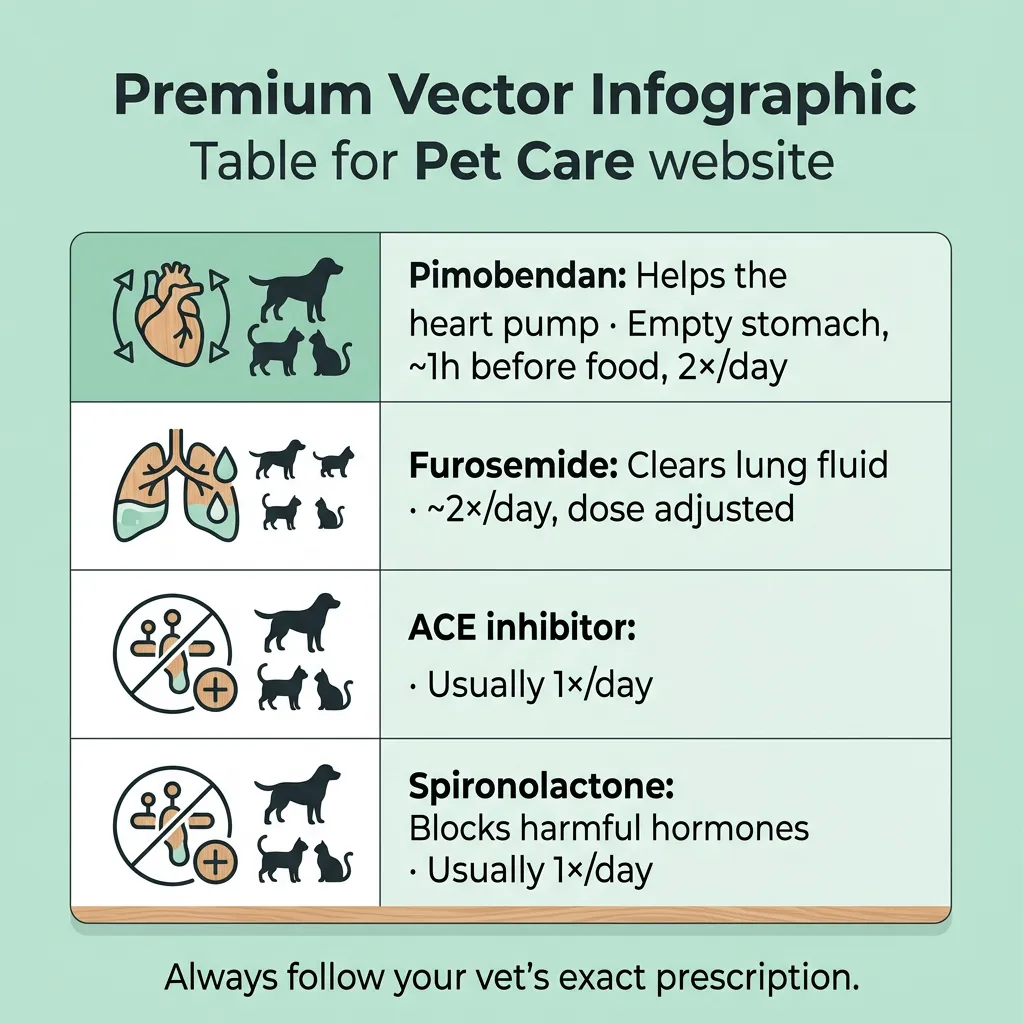
| Medication | What it does | Timing sensitivity |
|---|---|---|
| Pimobendan (Vetmedin) | Helps the heart contract and eases the load it pumps against | High — give ~1 hour before food, every 12 hours |
| Furosemide / torsemide | Loop diuretic; pulls fluid out of the lungs | High — ~every 12 hours, titrated; never double (dehydration, kidney risk) |
| ACE inhibitor (benazepril / enalapril) | Blunts the harmful RAAS hormonal cascade | Moderate — often once daily; no visible daily effect, so easy to skip |
| Spironolactone | Counters aldosterone in the same hormonal cascade | Moderate — often once daily; consistency is the point |
What are the two ways doses go wrong?
With a regimen this dense, two failure modes show up again and again:
- A missed or late dose. Skip the pimobendan or stretch the diuretic interval and you give fluid a chance to creep back into the lungs. Late evening doses, weekend disruptions, and "I thought it was already done" are the usual culprits.
- A double dose. The more dangerous twin. When no one can see whether a dose was given, two caregivers each step in — and for a diuretic, doubling up can tip a fragile dog toward dehydration and kidney injury within hours.
Both problems have the same root cause: no shared, real-time record of what was given and when. Memory, a whiteboard on the fridge, and a group text that goes unread during a meeting cannot tell the second caregiver what the first one already did. We cover the safeguards in depth in our guide to avoiding double-dosing your pet's medication — but the fix for both directions is identical: one log that updates the instant a dose is recorded.
Important medical disclaimer: SteadyTails is a tracking and coordination tool. It does not provide veterinary advice, diagnosis, treatment, or dosing recommendations. Heart-failure medications are potent and individualized — never change a dose, double up to "catch up" a missed dose, or alter the schedule without explicit instructions from your veterinarian. If you suspect a double dose or notice labored breathing, contact your vet or an emergency clinic immediately.
Stop guessing whether the diuretic was given
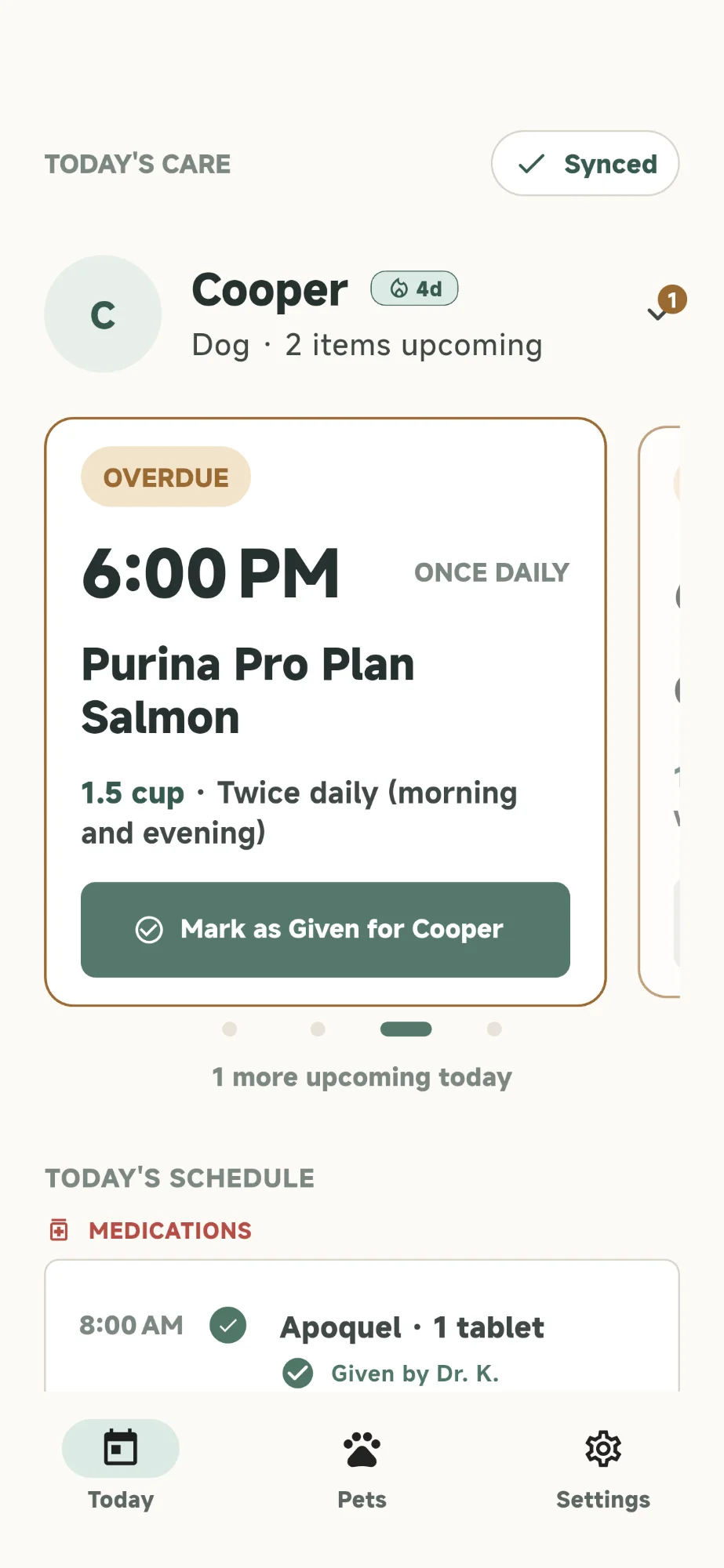
SteadyTails gives every caregiver one shared, real-time care timeline — so a dose logged on one phone instantly updates everyone else's, and duplicate reminders are suppressed automatically. That is exactly the safeguard a heart-failure schedule needs. Join the waitlist for early access on iOS and Android.
Join the SteadyTails waitlist →The one home number that warns you early: sleeping respiratory rate
Here is the most useful habit you can build alongside the medication routine — and it costs nothing. Your dog's sleeping respiratory rate (SRR), the number of breaths per minute while genuinely asleep, is one of the earliest and most reliable home signals that fluid is starting to build up in the lungs.⁵
The reference points from veterinary research are reassuringly simple:
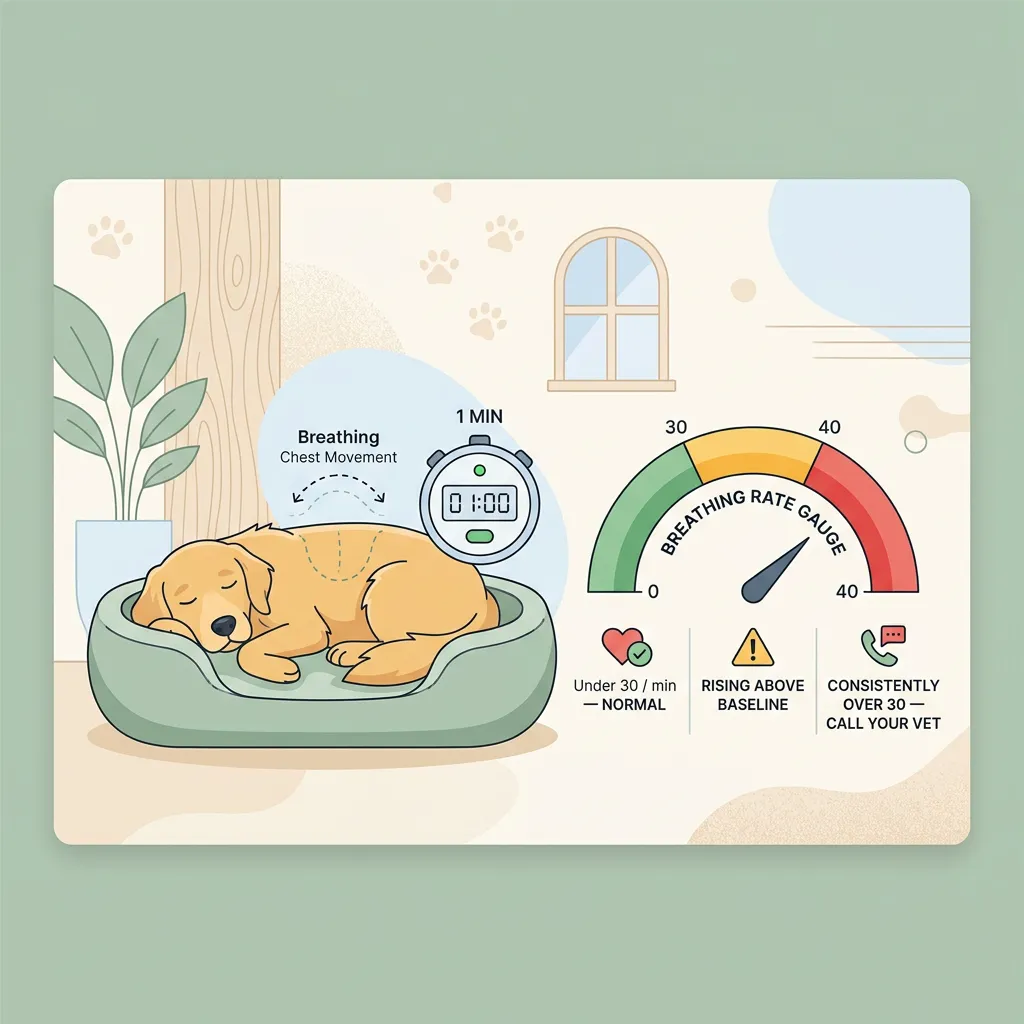
- Normal is under 30 breaths per minute. In studies of dogs with stable heart disease, the average sleeping rate was about 16 breaths per minute and only rarely exceeded 25.⁴
- Establish your dog's own baseline while they are stable — measure on most days and note the usual range. Within-dog rates are remarkably steady, so a change stands out.⁴
- A consistent climb above ~30 breaths per minute (or a clear, sustained rise above your dog's baseline) warrants prompt contact with your vet — it can precede visible distress.⁵
To measure it: wait until your dog is asleep and not panting, watch the chest, and count one full rise-and-fall as a single breath for 30 seconds, then double it (or count a full 60 seconds). The real power is in the trend: a single number means little, but a daily log that quietly drifts upward is the kind of early warning that lets your vet intervene before an emergency visit. Logging SRR next to the day's doses, appetite, and energy turns scattered observations into a pattern you and your vet can actually act on — and into a record you can hand over at the next recheck. Our vet-visit checklist shows how to put that history to work.
Does consistent treatment actually change the outcome?
It is fair to ask whether all this diligence pays off. The strongest evidence says yes. The EPIC trial, a large randomized, placebo-controlled study of 360 dogs with an enlarged heart from preclinical mitral valve disease (stage B2), found that starting pimobendan before heart failure developed delayed the onset of heart failure or cardiac death by a median of roughly 15 months — about 1228 days in the treated group versus 766 days on placebo — and the treated dogs also lived longer overall.¹ That is a substantial, real-world benefit from a medication given on schedule.
Not every drug class is a slam dunk in every stage, and it is worth being honest about that. The DELAY study, which tested spironolactone plus an ACE inhibitor in preclinical MMVD, did not show a statistically significant delay in the onset of heart failure, though it did find beneficial effects on heart remodeling and biomarkers.⁶ The practical takeaway is not to second-guess your cardiologist's plan — it is that the medications proven to extend good-quality time only work if they are actually given, correctly and consistently. The schedule is the therapy.
How do you build a heart-failure medication system that holds up?
The goal is to remove the routine from fragile human memory and put it into a shared system every caregiver trusts. Here is a framework drawn from what reliably improves adherence:
- Create one shared source of truth. Replace the fridge whiteboard and group texts with a single record every caregiver sees in real time. This is the highest-leverage change you can make, and it fixes missed doses and double doses at the same time.
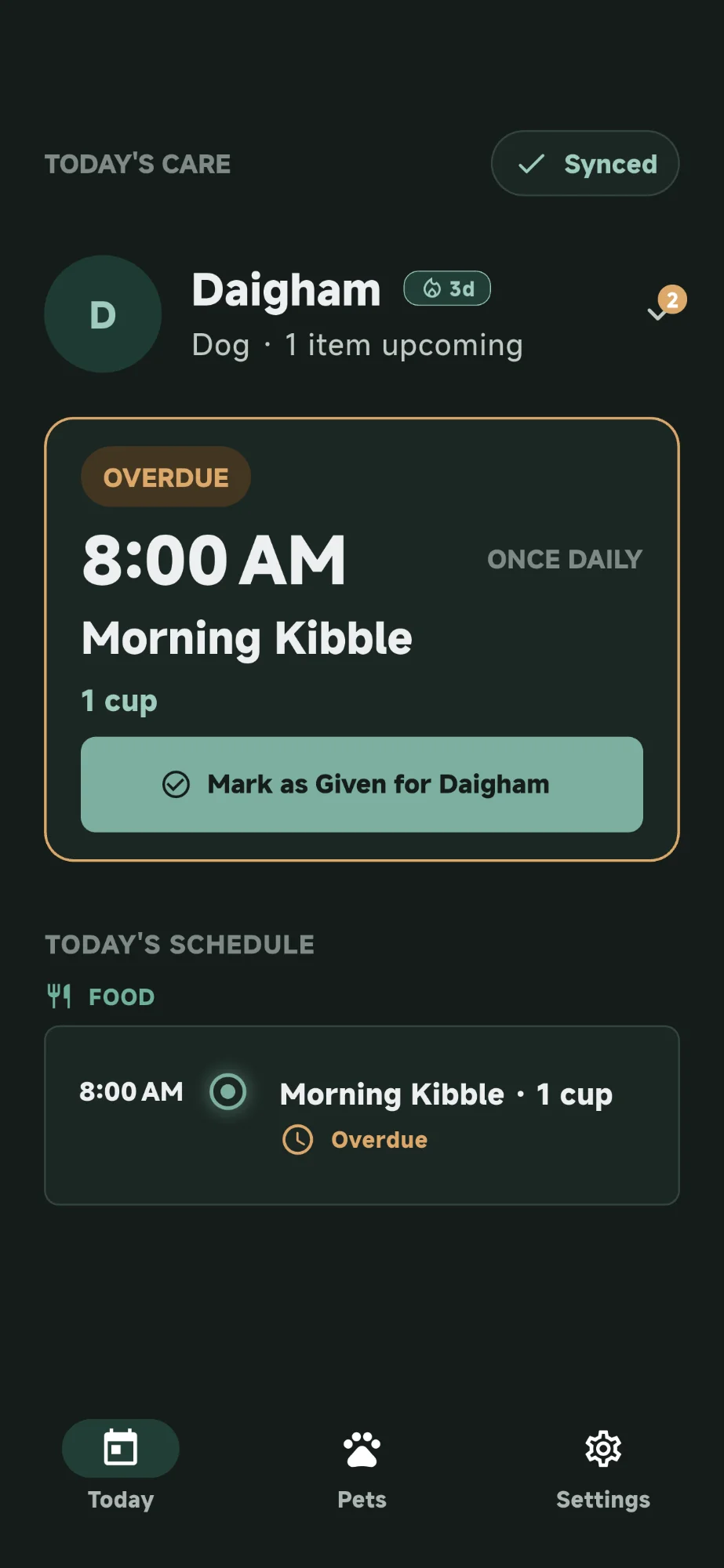
- Log every dose the instant it's given. When a dose is recorded immediately, a shared system can suppress the same reminder on everyone else's device — so no one re-gives the diuretic, and everyone can see at a glance that it's done.
- Encode the timing rules, not just the pills. Build the empty-stomach gap for pimobendan and the every-12-hour diuretic interval into the schedule itself, so the rule travels with the reminder instead of living in one person's head.
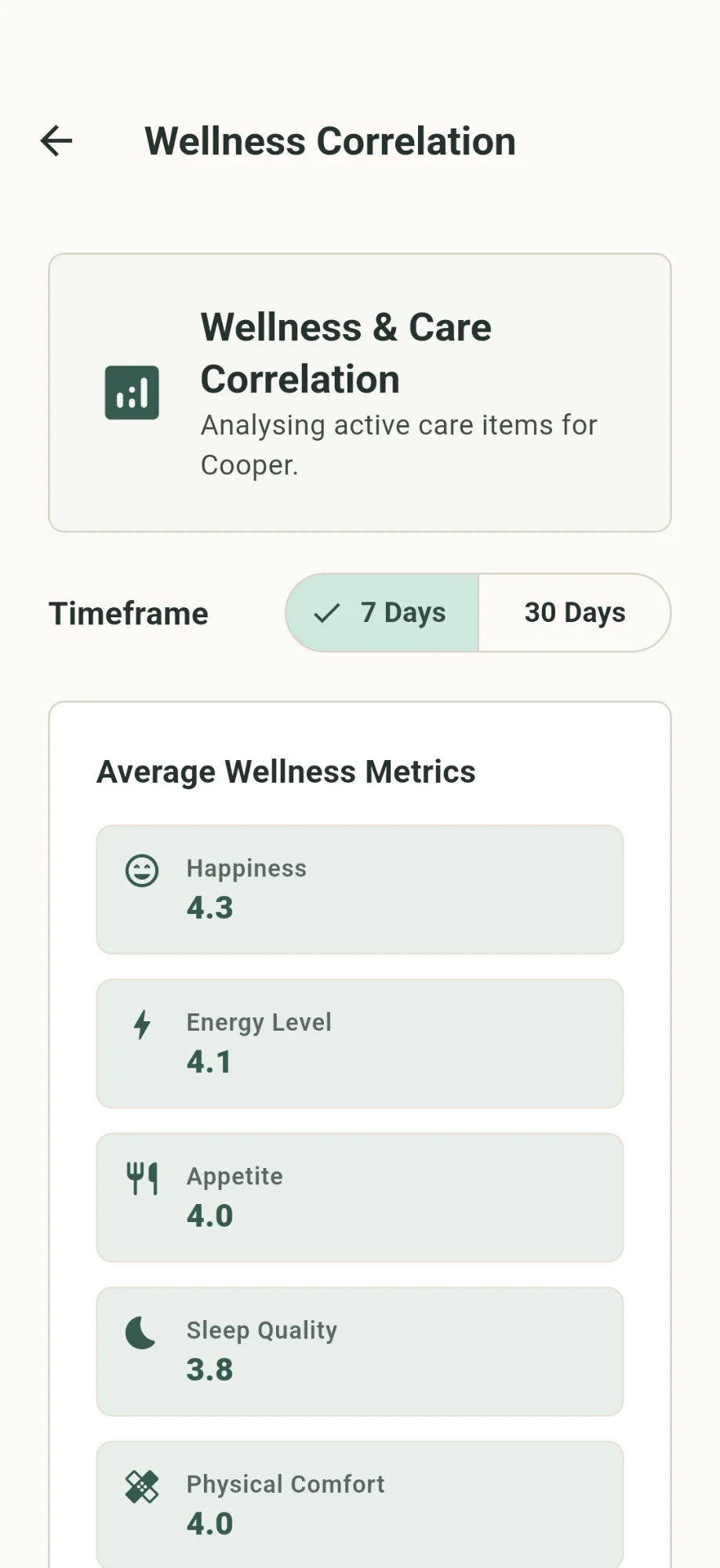
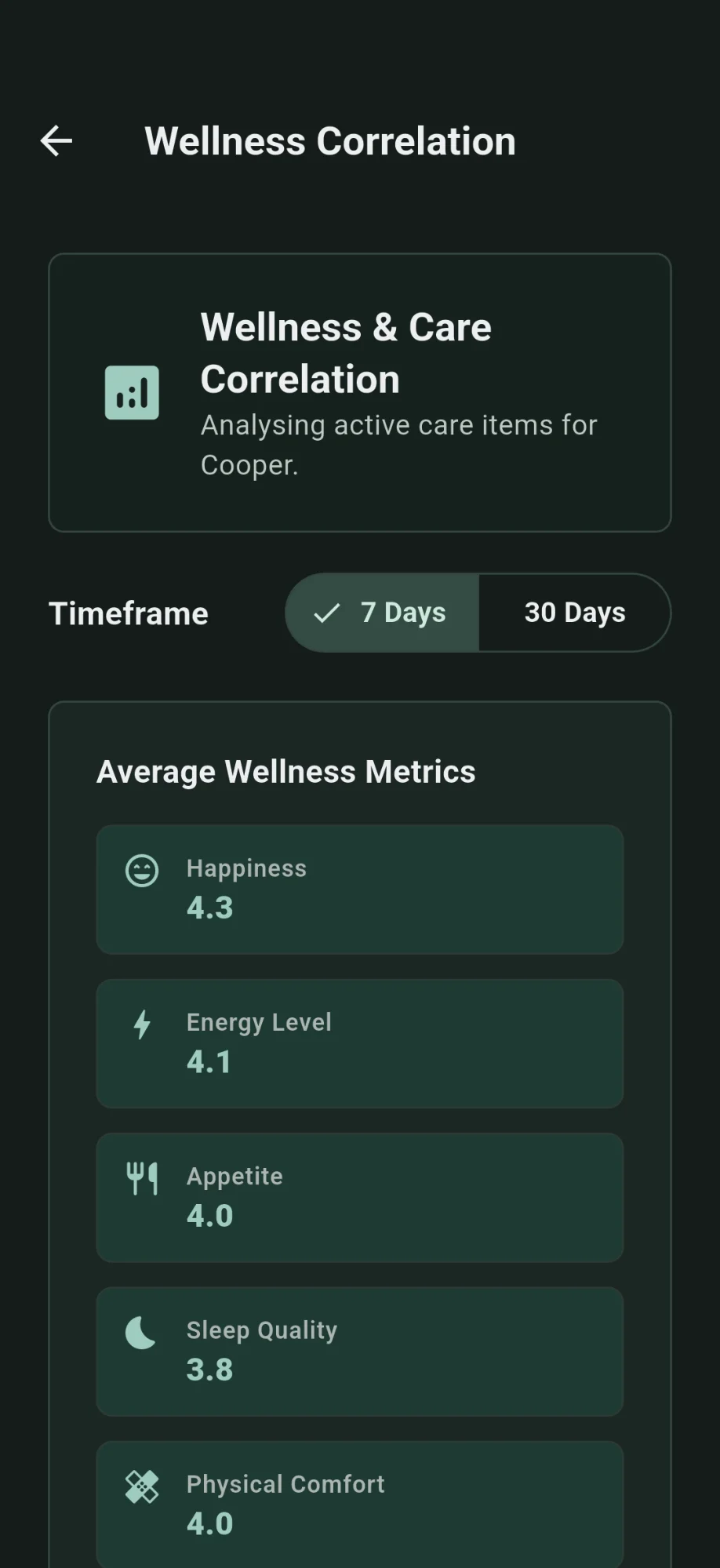
- Track the early-warning signs daily. Record sleeping respiratory rate, appetite, energy, and any coughing alongside the doses. Trends — not single readings — are what let your vet act early.
- Carry a vet-ready history to every recheck. Heart-failure plans are adjusted often. A clean export of doses given, SRR trends, and symptoms turns each appointment into a data-driven conversation instead of a guess. Our guide on why pets miss doses and the household system that fixes it goes deeper on the shared-care principles, and the senior pet care checklist helps if your dog is juggling heart disease alongside other age-related conditions.
The bottom line
A heart-failure diagnosis asks a lot of you — but most of what it asks is logistical, and logistics are solvable. The medications that buy your dog more good-quality time only deliver if they are given correctly, on time, by whoever happens to be home. Pair that consistency with a daily glance at the sleeping respiratory rate, and you have turned a frightening diagnosis into a manageable daily routine with a built-in early-warning system.
You cannot control the disease. You can control whether the dose is given, on schedule, every time — and that is one of the most powerful things you can do for a dog with a failing heart.
Bring shared certainty to your dog's heart care
Invite every caregiver, log each dose in one tap, suppress duplicate diuretic reminders automatically, track sleeping respiratory rate trends, and export a vet-ready history for every recheck. SteadyTails is coming soon to iOS and Android — reserve your spot free.
Get early access →References
- Boswood A, Häggström J, Gordon SG, et al. Effect of Pimobendan in Dogs with Preclinical Myxomatous Mitral Valve Disease and Cardiomegaly: The EPIC Study—A Randomized Clinical Trial. Journal of Veterinary Internal Medicine, 2016;30(6):1765–1779. pmc.ncbi.nlm.nih.gov/articles/PMC5115200
- Keene BW, Atkins CE, Bonagura JD, et al. ACVIM consensus guidelines for the diagnosis and treatment of myxomatous mitral valve disease in dogs. Journal of Veterinary Internal Medicine, 2019;33(3):1127–1140. PubMed Central (free full text)
- Boehringer Ingelheim. Vetmedin (pimobendan) product information & EU Summary of Product Characteristics — bioavailability 60–63%, reduced with food; administer approximately one hour before feeding. docs.boehringer-ingelheim.com
- Rishniw M, Ljungvall I, Porciello F, et al. Sleeping and resting respiratory rates in dogs with subclinical heart disease. Journal of the American Veterinary Medical Association, 2013;243(6):839–843. avmajournals.avma.org
- Clinician's Brief. Home Respiratory Rate Monitoring in Dogs & Cats. 2017. cliniciansbrief.com
- Borgarelli M, Ferasin L, Lamb K, et al. DELay of Appearance of sYmptoms of Canine Degenerative Mitral Valve Disease Treated with Spironolactone and Benazepril: the DELAY Study. Journal of Veterinary Internal Medicine, 2020;34(3):1746–1754. pubmed.ncbi.nlm.nih.gov/32032923